The U.S. can’t lose the bitcoin race to China
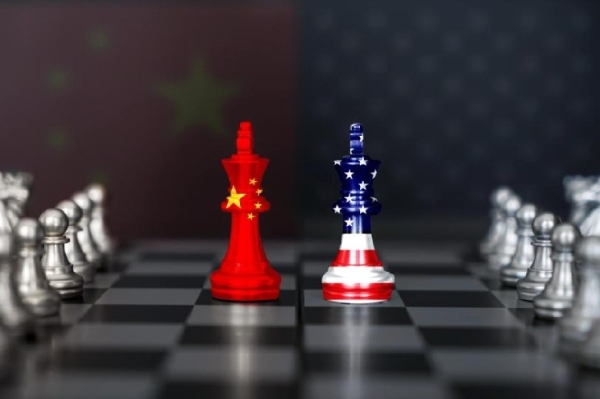
For decades, the U.S. dollar has amplified American power by fueling our economy, strengthening our military and giving us unmatched global influence. But today, the dollar’s dominance is being challenged in a new arena: digital assets.
The country that leads in digital assets will shape how money moves, how sanctions are enforced and how global power is projected. But while Washington debates, Beijing is executing a long-term strategy.
The Chinese Communist Party (CCP) has rolled out its digital yuan to expand its influence abroad and build payment systems that can bypass the U.S.-led financial order. At the same time, China remains deeply embedded in the crypto ecosystem, dominating mining hardware supply chains and maintaining the second-largest state-held bitcoin reserve.
That dual-track strategy is what makes China so dangerous. The CCP is pushing a centralized digital currency designed for surveillance and control while also stockpiling bitcoin, a decentralized system that it cannot fully control but can heavily influence. If China can shape both systems, it gains leverage no matter which direction the global financial system evolves.
That’s why we can’t afford to treat bitcoin like a financial sideshow.
Bitcoin is more than just a currency, though. It is the center of a paradigm shift in national security that the U.S. military is moving to capitalize on.
When I asked Secretary of War Pete Hegseth whether bitcoin can be used to project power and secure our advantage against China’s digital authoritarianism, his answer during a congressional hearing last month was direct: “Yes and yes.” While many of those department-wide initiatives remain classified, Hegseth confirmed that operational efforts are underway.
U.S. Indo-Pacific Commander Admiral Samuel Paparo also testified that bitcoin can be leveraged as a tool of power projection. And he revealed that the military has already deployed a live node on the Bitcoin network for operational testing. Bitcoin can potentially strengthen our cyber defenses by replacing soft code with hard physics, according to Major Jason Lowery. The Pentagon is currently researching how bitcoin can be used toward that end.
Our commanders see the battlefield shifting. President Trump does too.
That’s why he announced plans to establish the Strategic Bitcoin Reserve, recognizing bitcoin as a permanent national asset and positioning America as the country with the largest state-held bitcoin reserve in the world. But if we want to win this race, we must ensure the United States dominates the infrastructure behind digital assets.
That means securing the mining capacity and computing power needed to protect these networks. It means creating clear, pro-innovation rules so investment, talent and development stay in America. And it means rapidly integrating digital assets into our broader national security and economic strategy.
Critics claim bitcoin is too volatile and too risky. That thinking is outdated. Gold has fluctuated for decades yet remains a cornerstone of global reserves. Bitcoin’s scarcity and decentralized design make it a powerful complement to traditional assets. And while bad actors have abused digital assets, blockchain technology has actually made it easier for law enforcement to track and disrupt illicit activity.
The real threat is not bitcoin itself but letting our adversaries define its future.
Our failure to act will cede the future of financial power to the CCP, which uses technology to surveil, coerce and control. But if we lead, we can shape a system rooted in free markets, innovation and individual liberty that reinforces America’s global position.
For centuries, global influence has been dominated by whoever controls the backbone of money. The future is technology-driven, and the contest for global influence is headed toward a digital battleground.
The United States doesn’t get to choose whether this race happens — only whether we win it.