BlackRock just bought $250 million of these two cryptocurrencies
BlackRock just bought $250 million of these two cryptocurrencies 
 Cryptocurrency Mar 18, 2026 Share
BlackRock, the world’s leading asset manager, bought approximately $250 million worth of Bitcoin (BTC) and Ethereum (ETH) via its spot crypto ETFs on Tuesday, March 17.
Notably, BlackRock’s iShares Bitcoin Trust (IBIT) saw $169.34 million in inflows, while the Shares Ethereum Trust (ETHA) was $81.70 million in the green, as per the latest figures available on SoSoValue.
In total, Bitcoin ETFs added around $199.37 million on the same day, while Ethereum ETFs added approximately $138.25 million.
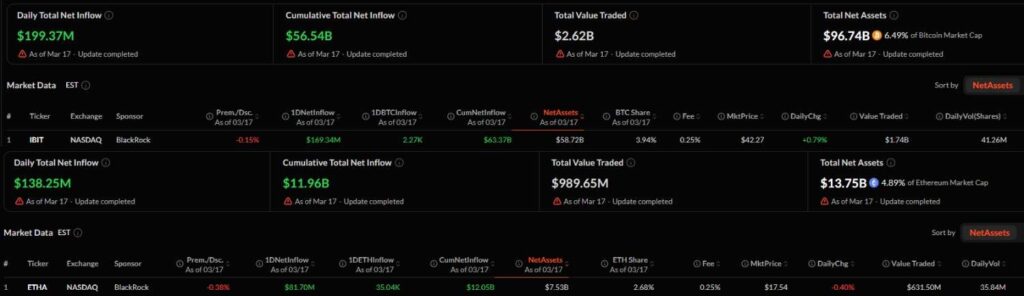 BlackRock crypto ETF moves. Source: SoSoValue
BlackRock is still the Bitcoin ETF leader, but Strategy is catching up
While BlackRock is still the leader when it comes to institutional Bitcoin holders, new data shows that Michael Saylor’s Strategy is now close to dethroning it.
Indeed, Strategy now holds 761,068 BTC, valued at approximately $56.2 billion. In comparison, BlackRock holds 782,170 BTC worth $57.79 billion, leaving a difference of just 21,102 BTC.
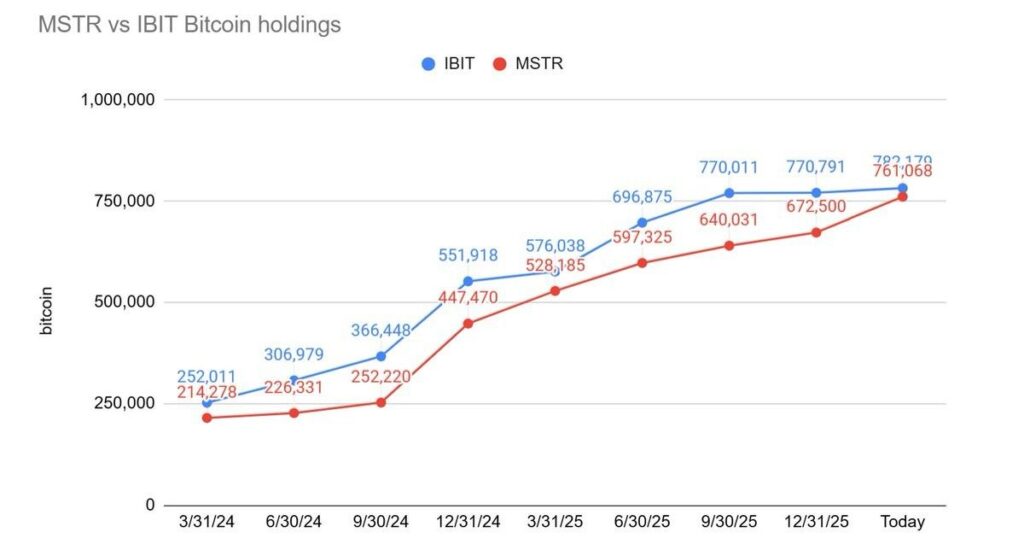 Strategy vs. BlackRock Bitcoin holdings. Source: Bitcoin Magazine
The narrowing gap follows a significant new purchase disclosed earlier this week. In a Form 8-K filing with the U.S. Securities and Exchange Commission, Strategy revealed a 22,337 BTC purchase between March 9 and March 15, worth roughly $1.57 billion.
The transaction marks Strategy’s largest Bitcoin buy since January, when it invested about $2.1 billion in the asset.
Institutional crypto ETF demand drives recovery
More aggressive institutional demand also supports Bitcoin’s recent rebound. Over the past week, Bitcoin has climbed 6.8% to $74,200, outperforming both gold and major equity indices despite ongoing geopolitical tensions in the Middle East.
This growing appetite also creates more buying pressure, as persistent net inflows directly reduce available sell-side liquidity.
At the same time, allocations to Bitcoin continue to expand across not just ETFs but also corporate treasuries and low-activity wallets, signaling a broader structural shift toward long-term accumulation.
Featured image via Shutterstock