Bitcoin’s ‘time-based capitulation’ nears 50 days, echoing conditions prior to 2025 surge
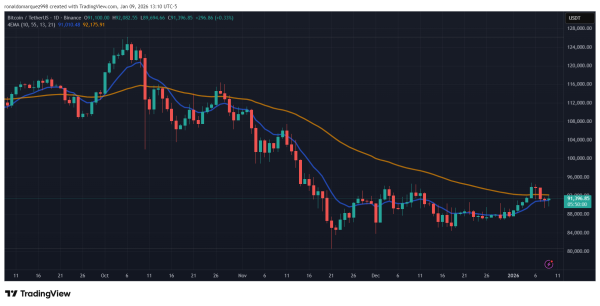
Bitcoin’s BTC$90,591.10 price is locked in a back-and-forth range for weeks, mirroring similar choppy action from early last year.
The cryptocurrency has traded between $80,000 and $95,000 since Nov. 21, now approaching the 50th day of this roughly 20% range. This somewhat aligns with the duration of the back-and-forth trading between $76,000 and $85,000 observed from late February 2025 to early April 2025.
That consolidation lasted for 52 days and ended with a renewed move higher that saw prices ultimately peak at over $126,000 in October.
Time-based capitulation
Both are examples of what traders refer to as a time-based capitulation, i.e., prolonged, boring price action that leads impatient holders to exit the market.
Time-based capitulations have become a norm in recent years, with bitcoin maturing as an asset without the extreme drawdowns seen in earlier cycles. That’s why the multi-year uptrend from 2023 resembles stair-step price action, marked by upswings, pullbacks, and dull consolidations before the next move higher.
What next?
In traditional markets, the economic re-acceleration trade is now the favored narrative, supported by the Atlanta Fed’s GDPNow estimate, which shows real GDP growth tracking at 5.4% for the fourth quarter. Although it is likely to be on hold in January, the Federal Reserve is still expected to cut interest rates by 50 basis points in 2026.
At the same time, President Trump on Thursday announced that he is urging the purchase of up to $200 billion in mortgage-backed securities, reinforcing expectations of continued liquidity support.
“Political pressures on the Federal Reserve could well extend beyond lowering interest rates to include asset purchases designed to influence housing affordability directly,” said former Pimco CEO and well-known economic commentator Mohamed El-Erian.
Trump’s announcement also calls for markets to pay heed to the affordability squeeze, a source of public anxiety, which will eventually elicit an aggressive policy response, El-Erian added.
Taken together, these factors suggest a potential for the ongoing price action to end with a renewed uptrend, similar to what occurred in April last year.