Ripple concludes 700 million XRP escrow lock for April
Ripple concludes 700 million XRP escrow lock for April 
 Cryptocurrency Apr 2, 2026 Share
Ripple Labs re-locked 70% of the 1 billion XRP received from its escrow account in April 2026.
The blockchain payment company returned 700 million tokens to the escrow system in two tranches of 500 million and 200 million on April 1, making approximately $945 million worth of tokens temporarily inaccessible.
🔒 500,000,000 #XRP (675,337,377 USD) locked in escrow at #Ripple pic.twitter.com/5YNl6Gukqi
— MarketSleek (@Market_Sleek) April 2, 2026
Although Ripple re-locked XRP into escrow a significant amount of XRP, it increased the circulating supply with an extra 300 million units, valued at approximately $384 million on April 2.
At press time, the amount in the escrow stood at around 33.344 billion, while the net circulating supply was at roughly 66.626 billion, according to on-chain analysis from XRPSCAN.
Ripple Labs could be following a similar trend to Q1 in the second quarter, after it released 900 million tokens in the first three months of 2026.
What is the impact of Ripple’s escrow activity on XRP price?
Although the company has, over the years, justified its monthly dump as crucial to its growth and the mainstream adoption of the XRP ledger, the significant monthly sell-offs have weighed down on the price of XRP
Over the past 24 hours, XRP price fell by more than 4%, trading at around $1.30 at the time of this publication.
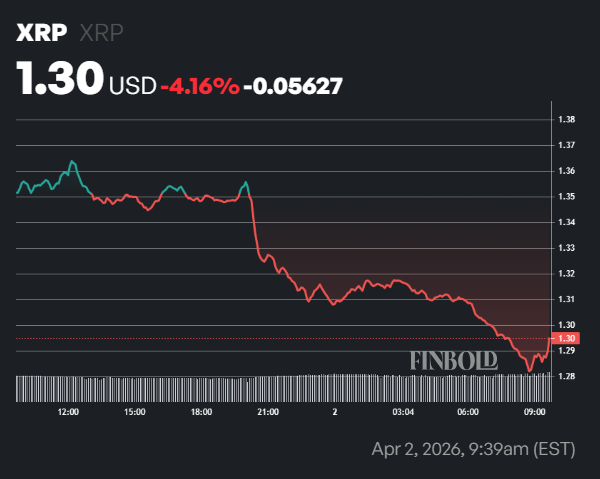 XRP price 24-hour chart. Source: Finbold
David Schwartz defends XRPL-Ripple moves
David Schwartz, a founding member of XRP Ledger, has, however, defended Ripple’s business model, which is heavily dependent on monthly sales from the escrow account to remain profitable.
"Yeah, this makes business sense for us to do and would make us money, but we don't want to do it because it also makes this other company money."
— David 'JoelKatz' Schwartz (@JoelKatz) April 2, 2026
Schwartz stated on Thursday that Ripple’s close relationship with XRP Ledger would be mutually beneficial, but not necessarily lucrative for other companies adopting its payment products.