Bitcoin’s five-month slide: why BTC is set for worst losing streak since 2018
With a few hours still to go, Bitcoin $BTC$64,111.46 is on track to post its worst losing streak since 2018, with February about to mark a fifth consecutive monthly decline.
The run of losses would be the longest since that 2018–2019 bear market and follows what has already been bitcoin’s worst first 50-day start to a year on record, leaving $BTC down more than 25% year to date and on course for its first-ever back-to-back January and February declines.
More? The bitcoin-to-gold ratio fell to 12.288 ounces in February, marking a 70% drawdown over the last 14 months.
Bitcoin is also about to close out its worst month since June 2022, as the collapse of Terra-Luna that year sent the price plunging by about one-third. With bitcoin currently at about $64,000, the decline this February stands at nearly 20%.
But some analysts argue that comparing the current stretch to 2018 oversimplifies what’s unfolding.
Repricing within a structural regime shift
“What we’re seeing isn’t just weakness. It’s repricing inside a structural regime shift,” Mati Greenspan, senior eToro market analyst and founder of Quantum Economics, told CoinDesk.
He believes that while tariffs, ETF flows and macro fears may explain the timing of the selloff, they don’t explain the deeper move, which he sees as a broader recalibration in how markets value risk assets in an era of elevated uncertainty.
Bitcoin is also approaching a fifth straight weekly decline, a streak last seen between March and May 2022.
Geopolitical tensions have strengthened the U.S. dollar and crude oil prices, tightening financial conditions and weighing on risk assets.
Yet, this downturn stands out for another reason: bitcoin’s uneven relationship with equities. While U.S. stocks have remained relatively resilient, $BTC has sharply underperformed, marking an unusual period of instability in its traditional risk-asset correlation.
Confronting arguments
“Bitcoin doesn’t have a narrative right now, and it’s getting squeezed from both sides,” Jonatan Randin, senior market analyst at PrimeXBT, said in an email to CoinDesk.
Randin pointed to mounting macro pressure, including $3.8 billion in ETF outflows over the past five weeks, escalating tariff tensions and a Federal Reserve that has yet to signal imminent rate cuts.
While gold has attracted safe-haven flows and equities have ridden AI momentum, bitcoin has lagged. “Gold is up roughly 48% since September while bitcoin has fallen about 41% over the same period,” Randin said, explaining that the divergence shows investors are still treating $BTC as a liquidity-sensitive risk asset rather than digital gold.
The correlation picture has been volatile. “The 20-day $BTC-Nasdaq correlation swung from -0.68 to +0.72 between early and mid-February. That’s not decorrelation, that’s instability,” Randin said. “When the risk-on trade is working, and one asset gets left behind, that’s usually weakness, not strength.”
The narrative “hasn’t changed since 2009. It is a global, neutral alternative to debt-based fiat systems,” according to Greenspan.
Decorrelations are not random
“When correlations break during regime shifts, it’s usually not random. It’s early repricing,” Greenspan said. “If equities are still being treated as cyclical growth exposure while bitcoin starts trading more like a sovereign hedge, that divergence is structurally bullish.”
Despite the scale of the drawdown, Randin cautioned against assuming the correction is over.
“Bitcoin’s now declined 52% from the October highs,” he said. “That sounds like a lot, but when you look at prior bear markets where we’ve seen drawdowns of 80% or more, we could realistically be only halfway through this correction.”
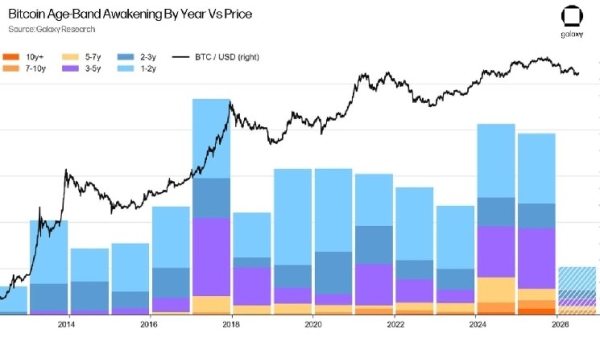
He added that while the weekly relative strength index (RSI) has fallen to its lowest reading in bitcoin’s history and accumulator addresses have absorbed roughly 372,000 $BTC since late December, signals often associated with cycle bottoms, similar conditions in past downturns were followed by another 30% to 40% drop before a definitive low formed.
Greenspan, however, said sentiment may already reflect much of the pessimism. “When sentiment gets this uniformly negative while long-term fundamentals remain intact, reversals tend to be sharp,” he said.
Until bitcoin can reclaim the $68,000–$72,000 zone, Randin said, “I’d expect this streak to grind on rather than break cleanly.” He identified $60,000 as a key near-term support level, with the 200-week moving average near $58,500 just below it.
“The losing streak narrative focuses on five months,” Greenspan added. “The structural story spans decades.”